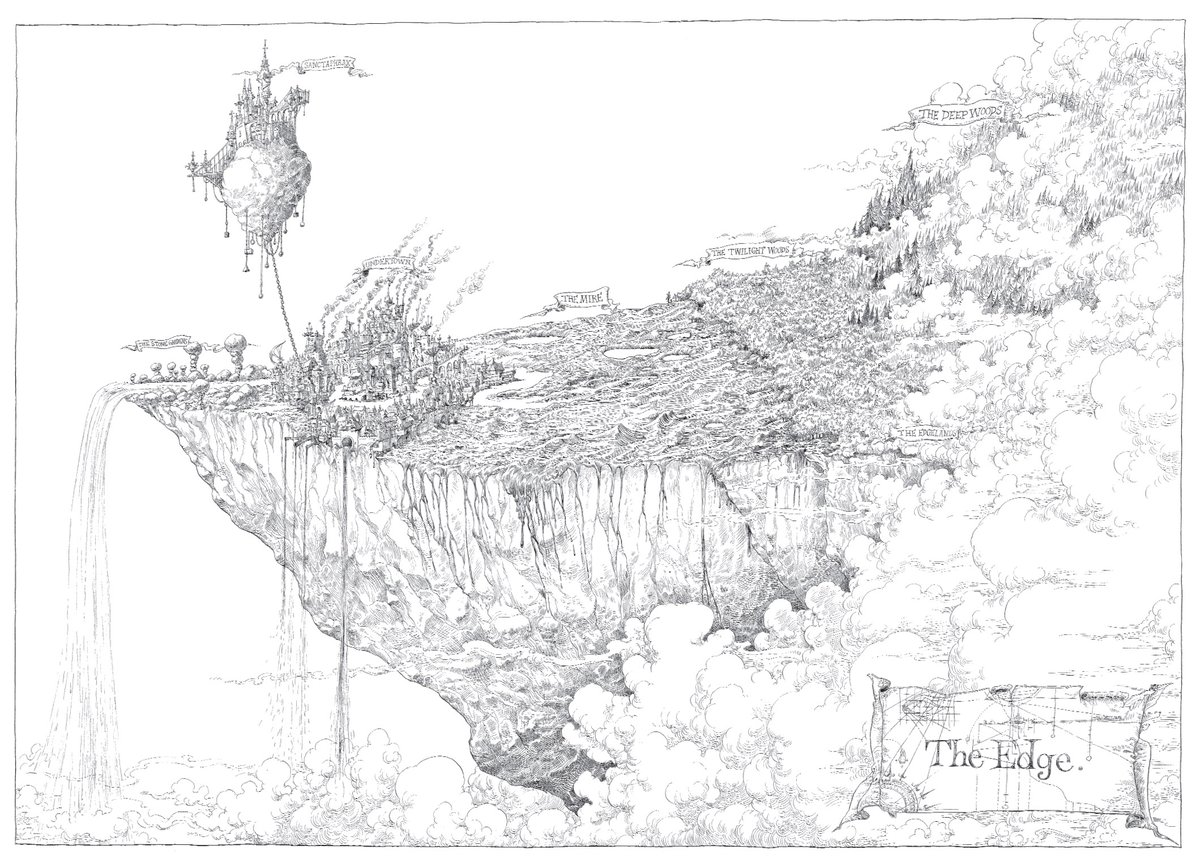
Step into the world of the Edge, and you immediately sense a fundamental truth: life here is a relentless, beautiful, and often agonizing cycle. Paul Stewart and Chris Riddell’s The Edge Chronicles isn’t merely a dark fantasy series for middle-grade readers; it's a profound exploration of continuity and change, the burden of legacy, and the brutal, often self-inflicted cycles that shape history. From its precarious sky-cities to its monstrous Deepwoods, this series challenges conventional fantasy tropes at every turn, daring to ask what heroism truly means in a world designed to break you.
For anyone diving deep into the narratives of Twig, Rook, Quint, and Cade, a robust understanding of the underlying themes and literary techniques is essential to truly appreciate its genius. It’s a world that demands thoughtful engagement, where beauty and horror often walk hand-in-hand, and happy endings are, at best, temporary respites.
At a Glance: Why The Edge Chronicles Resonates
- A World Built on Cycles: From apocalyptic resets to generational lineages, the series constantly explores patterns of destruction, rebirth, and human (or non-human) perseverance.
- Moral Complexity Reigns: Heroes are flawed, villains are often tragically human, and choices are rarely black and white, reflecting a cynical "Crapsack World."
- Subverting Fantasy Tropes: Expect high character mortality, unreliable safety nets, and protagonists who often face personal demons as daunting as any external foe.
- Intricate Worldbuilding & Lore: A rich tapestry of diverse races, unique "Phraxpunk" technology, and dangerous ecosystems create a deeply immersive experience.
- The Power of Lineage and Legacy: The struggles of the Verginix family highlight the weight of inherited responsibilities and the potential to break damaging ancestral patterns.
- Existential Threats: Beyond physical monsters, the series delves into the psychological horror of entities like the Gloamglozer, feeding on fear and despair.
Setting the Stage: The Edge as a Character Itself
The first step in any literary analysis of The Edge Chronicles is recognizing the world of the Edge not just as a backdrop, but as a living, breathing, and often malevolent character. This is a "Crapsack World" where danger isn't merely an obstacle to overcome; it's the very fabric of existence. The Edge is literally the edge of the world, a precipice of perilous environments where survival is a daily struggle.
Consider the Deepwoods, teeming with bizarre wildlife and lurking horrors, or the memory-erasing Twilight Woods, a psychological as much as physical threat. Even urban centers like Undertown harbor widespread corruption and, often, technically illegal slavery. This pervasive sense of peril, where apocalyptic events known as "Ages of Flight" regularly reshape the landscape and society, ensures that every journey is high stakes, and every character choice carries immense weight. The Edge, in its unforgiving nature, forces characters to confront their limits, define their morality, and fight for every scrap of hope. It's a world that mirrors the internal struggles of its inhabitants, always on the brink, always demanding more.
The Unforgiving Cycles of Existence: A World of Rebirth and Ruin
One of the most profound and pervasive themes in The Edge Chronicles is the concept of cycles. The series doesn't present a linear progression of events but rather a spiral, where history repeats, generations rise and fall, and even technology operates on cyclical principles.
Apocalyptic Rhythms: Continuity and Change
Each "Age of Flight" marks a period of catastrophic upheaval, radically reshaping the landscape and societal structures. These aren't just natural disasters; they're often tied to grand, hubristic scientific endeavors gone wrong, or the resurgence of ancient, malevolent forces. Yet, through these cycles of destruction, pockets of knowledge and perseverance endure. Organizations like the Knights Academic and later the Descenders appear in every age, dedicated to preserving lore and understanding the Edge. This tension between continuity—the survival of knowledge and certain lineages—and radical change—the complete overhaul of the physical world—is a central engine of the narrative. It reminds us that while the world might burn, the embers of learning and human spirit often manage to spark anew.
Nature's Brutality: Survival of the Fittest (or Luckiest)
The natural world of the Edge is explicitly designed to be dangerous. The monster-filled Deepwoods is just one example; there's also the deadly Nightwoods, leading to the legendary Riverrise, and the aforementioned Twilight Woods. This isn't a world where nature is a benevolent force; it's indifferent, brutal, and utterly unforgiving. Characters frequently die, often violently, and not always heroically. This relentless natural threat underscores a core message: survival isn't a given, and even the most seasoned adventurers can fall victim to the whims of a truly wild world. It teaches that adaptation, cunning, and sometimes sheer luck are as important as courage.
Morality in the Miasma: Grey Areas and Hard Choices
The Edge Chronicles is celebrated for its morally complex characters. There are no clear-cut heroes and villains in the traditional sense; instead, we encounter individuals driven by understandable motives, making desperate choices in an impossible world.
Flawed Heroes and Complex Villains
Consider the central protagonists: Twig, Rook, Quint, and Cade. Each embarks on a journey born of circumstance rather than inherent heroism, often grappling with personal insecurities, parental abandonment, or the weight of expectation. Twig, an orphan, struggles with his identity and destiny. Rook faces the challenge of breaking generational patterns of parental neglect. Quint, a sky pirate, grapples with ambition and loyalty. These are not paragons of virtue but rather deeply human (or fourthling) figures, prone to mistakes and doubts.
On the other side, antagonists like the manipulative Vilnix Pompolnius or the fanatical Orbix Xaxis are not cartoonishly evil. Vilnix's ambition, while destructive, is rooted in a desire for control and order in a chaotic world. Orbix's zealotry stems from a profound (albeit misguided) belief in his cause. Perhaps the most poignant example is Vox Verlix, an intelligent inventor who suffers repeated betrayals. His descent into madness and villainy is a tragic consequence of his brilliance being exploited and his loyalty unrewarded. This blurring of moral lines forces readers to confront the nuances of good and evil, challenging simplistic interpretations and fostering empathy for even the most misguided characters.
The Weight of Lineage: Family, Legacy, and Breaking the Cycle
The Verginix family forms a lineage of heroes across five generations, a testament to enduring courage but also a vehicle for examining inherited burdens. The pattern of parental abandonment, a recurring motif among many protagonists, highlights the psychological cost of their heroic callings. Twig is left by his biological parents; Quint's parents are largely absent due to their roles. This cycle of separation and loss is a core challenge for these heroes.
However, the series also explores the potential to break these cycles. Rook Barkwater, for instance, actively strives to be a present and loving parent, determined not to repeat the mistakes of his predecessors. The narrative culminates with Cade and Celestia having a child, a new "Twig," suggesting a fresh start and a conscious effort to nurture and protect the next generation. This exploration of family—its flaws, its enduring bonds, and its capacity for positive change—is a powerful emotional undercurrent in the series, resonating deeply with readers who understand the complexities of their own family histories. Explore the Edge Chronicles for more on these generational sagas.
The Corrosive Power of the Gloamglozer and Manufactured Horrors
Beyond the natural dangers, the Edge is plagued by existential threats, particularly those that prey on the mind and those born of scientific hubris.
Fear, Despair, and the Gloamglozer's Grip
The Gloamglozer stands as a major antagonist, not merely a physical threat but an entity that shapeshifts and, critically, feeds on negative emotions: fear, despair, and doubt. Its presence fuels conflicts and creates devastating phenomena like stone-sickness, which causes flight rocks—the very foundation of sky-ship travel and floating cities like Sanctaphrax—to crumble. This entity represents the insidious power of internal negativity. It reminds readers that true enemies are not always external monsters but can be the very doubts and anxieties that plague one's own mind. Overcoming the Gloamglozer requires not just strength, but resilience of spirit, hope, and unwavering determination.
Unintended Consequences: When Ambition Becomes Catastrophe
A recurring narrative thread involves attempts to create life in the Edge, often with catastrophic results. These ambitious, often misguided, scientific endeavors lead to the appearance of murderous beings, the enigmatic "Cloud Eater" (a continent-sized entity that drains heat), and the terrifying Blood-Red Glister. This theme serves as a stark warning about the dangers of unchecked scientific ambition, particularly when it disregards ethical boundaries or the delicate balance of an ecosystem. It highlights how even noble intentions, when coupled with ignorance or arrogance, can unleash forces far beyond human control, perpetuating the "brutal cycles" of destruction that define the Edge.
Technology, Knowledge, and the Quest for Understanding
Despite its fantastical elements, The Edge Chronicles features a distinct technological aesthetic and a profound respect for the pursuit of knowledge.
Phraxpunk Innovations and Sky-Ships
The series' technology, often dubbed "Phraxpunk" or Steampunk, is intrinsically linked to the unique resources of the Edge. Sky-ships, navigating the open sky as if it were an ocean, rely on "flight rocks" (cool rock rises, hot rock sinks) for buoyancy and propulsion. Stormphrax, an extremely heavy mineral, serves multiple critical functions: anchoring Sanctaphrax, purifying water as phraxdust, and fueling large airships. This unique technological framework is not merely decorative; it drives plot points, creates unique challenges, and defines the very structure of society in the Age of Flight. The meticulous detail given to these mechanisms grounds the fantasy in a tangible, believable reality.
Guardians of Lore: Knights Academic and Descenders
In a world prone to apocalyptic resets, the preservation of knowledge becomes paramount. Organizations like the Knights Academic and, in later ages, the Descenders, are critical to the Edge's continuity. These groups are dedicated to seeking, recording, and protecting ancient lore, scientific principles, and historical accounts. They represent the intellectual and scholarly backbone of society, striving to learn from the past to prevent future catastrophes. Their enduring presence across different ages underscores the series' emphasis on the value of knowledge and the importance of understanding the world's cycles to perhaps, one day, break free from their most destructive aspects.
The Rich Tapestry of Life: Races and Inclusivity (Edge Style)
The world of the Edge is teeming with diversity, boasting over forty distinct races. This extensive array of beings contributes significantly to the series' unique flavor and thematic depth.
Diverse Denizens of the Edge
From various types of waifs, trolls, and trogs to goblins and "fourthlings" (the human-like race, a blend of Edge peoples), the series presents a vibrant, albeit often dangerous, ecosystem of sentient beings. Notably, these races are frequently cross-fertile, a biological detail that further blurs traditional racial lines and reinforces the interconnectedness of life on the Edge. This diversity allows for rich character interactions and broadens the scope of societal commentary. It’s a subtle yet powerful statement about how different groups, despite their differences, must coexist and often rely on one another for survival in a world that threatens them all.
Subverting Stereotypes: Hekkle, Mother Bluegizzard, and Banderbears
One of The Edge Chronicles' most commendable achievements is its subversion of racial stereotypes. While some races, like shrykes (aggressive, flightless bird-people), are generally depicted as antagonistic, the series introduces heroic or complex individuals from these very groups. Hekkle and Mother Bluegizzard, shrykes who exhibit extreme sexual dimorphism (fierce females, "weedy" males), become unlikely allies and even central figures, demonstrating courage and loyalty that defy their species' reputation. Similarly, banderbears, typically enormous, gentle giants, consistently prove to be noble and steadfast companions, challenging the monstrous appearance they might otherwise project. This deliberate choice to portray individuals who rise above their perceived racial predispositions enriches the narrative and promotes a message of judging characters by their actions, not their origin. It’s a powerful lesson in empathy, especially poignant in a series often geared towards younger readers.
The Power of Narrative: Foreshadowing, Rebirth, and Lingering Questions
The intricate craftsmanship of The Edge Chronicles lies not just in its worldbuilding but in its narrative structure, which consistently rewards careful reading.
Intricate Continuity and Unraveling Mysteries
The series excels at intricate continuity, where seemingly minor details in one book can become crucial plot points hundreds of years later. Foreshadowing is a masterclass, with subtle hints dropped across trilogies about future events, the true nature of the Gloamglozer, or the fate of key characters. Recurring objects, like ancient artifacts or specific sky-ships, reappear across different ages, serving as touchstones that link the vast timeline together. This depth of planning encourages re-reads and fosters a sense of discovery, as readers connect the dots and unravel the grander mysteries of the Edge. It’s a testament to the authors’ vision and commitment to a cohesive, evolving mythology.
Glisters and the Cycle of Rebirth
A fascinating aspect of the series' mythology is the concept of "glisters." Many prominent characters, including Twig, Quint, and Rook, eventually ascend and are reborn as these ethereal, shimmering entities. This spiritual transformation isn't an escape but another form of continuity, a way for beloved heroes to remain connected to the Edge and its ongoing cycles. It provides a glimmer of hope, a sense that even after death, a part of the spirit endures and can continue to influence the world. This cyclical rebirth echoes the apocalyptic rhythms of the Edge itself, suggesting that life, in various forms, always finds a way to persist. It also adds a philosophical layer to character mortality, transforming it from a mere end to a new beginning.
Why The Edge Chronicles Endures: A Literary Analysis Perspective
The Edge Chronicles holds a unique and revered place in dark fantasy, particularly for a middle-grade audience. Its enduring appeal stems from its unflinching approach to storytelling and its willingness to challenge conventions.
Subverting Fantasy Tropes
Unlike many contemporary fantasy series that offer clear moral victories and predictable heroic journeys, The Edge Chronicles consistently subverts expectations. Happy endings are frequently undermined in subsequent installments, reminding readers that peace is fleeting. Protagonists face not just external threats but profound personal challenges, such as parental abandonment or complex, flawed family relationships, which are often more difficult to overcome than any monster. This realism, paired with high stakes and character mortality, sets it apart. It teaches readers that life is messy, that consequences are real, and that heroism often means picking yourself up after defeat, not just achieving a singular victory.
Emotional Resonance and Unflinching Realism
The emotional impact of The Edge Chronicles is immense. Readers genuinely feel the peril, the loss, and the small, hard-won victories. The series doesn't shy away from tragedy or the darker aspects of human nature, presenting them with a raw honesty that resonates deeply. By allowing characters to suffer, to fail, and sometimes to die, Stewart and Riddell create a world that feels incredibly real, despite its fantastical elements. This unflinching realism fosters a stronger connection between reader and character, as the struggles feel authentic and the triumphs, when they occur, are all the more meaningful. It prepares readers for the complexities of life itself, wrapped in an unforgettable adventure.
Reflecting on the Brutal Cycles
The Edge Chronicles is a masterful tapestry woven with threads of brutal reality, profound hope, and intricate lore. Its exploration of generational cycles, moral ambiguities, and the constant tension between destruction and rebirth provides a rich ground for literary analysis. It’s a series that respects its audience, daring to tell stories where the world is dangerous, heroes are flawed, and solutions are hard-won and often temporary.
As you reflect on the journeys of Twig, Rook, Quint, and Cade, consider how their individual struggles mirror the larger, relentless cycles of the Edge itself. What lessons can be drawn from a world where knowledge must be constantly fought for, and the past forever casts its shadow on the future? Perhaps the most enduring message is not that the cycles can be broken entirely, but that within them, there is always room for courage, compassion, and the defiant choice to strive for something better. If you haven't yet, now is the perfect time to revisit these tales or embark on your first adventure into the unpredictable, unforgettable world of the Edge.